The notion that the modern world evolved in the confines of Europe and started in the 17th to 20th centuries carries a narrow viewpoint while ignoring the fact that all societies and civilizations globally contributed to its evolution since all periods of human habitation and development.
Different ideas, sciences, religions, philosophies, literature, etc., have originated since antiquity in all parts of the world.
The European perspective not only overlooks the rich tapestry of global contributions but also discounts the deep, interconnected roots that span civilizations far beyond its confines.
The truth is the evolution of the modern world is a collective journey where diverse societies, ideas, and philosophies have converged, clashed, and collaborated over millennia to shape the world as we know it today.
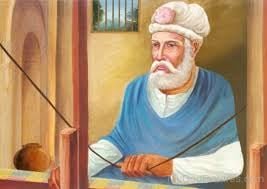
Enter Sant Kabir, the 15th-century Indian mystic poet and saint whose revolutionary thoughts rippled through time, leaving an indelible mark on the fabric of world civilization.
Kabir, a weaver by profession, wasn’t just another voice in the crowd; he was a thunderous presence who questioned the status quo and championed an inclusive vision of spirituality that transcended the rigid boundaries of religion, caste, and creed.
Kabir’s influence on the Bhakti movement—a devotional renaissance within Hinduism—is well documented. However, his impact was not confined to the spiritual and cultural renaissance of India alone. His radical ideas and poetry resonated far beyond the subcontinent, embedding themselves in the global consciousness and contributing to the broader discourse on humanism, tolerance, and the shared essence of all religions.
His verses, a rich tapestry of metaphors and metaphysical musings, are enshrined not only in the hearts of his followers but also within Sikhism’s revered scripture, the Guru Granth Sahib, where 225 of his poetic gems shine brightly.
But Kabir’s contributions went beyond mere words; they were seeds of thought that helped germinate a modern outlook on life—a perspective that embraces diversity, values social equity, and promotes spiritual democracy.
At a time when dogmas ruled and religious orthodoxy held sway, Kabir’s voice was a clarion call for unity and understanding, a precursor to the very ideals that underpin the modern, interconnected world.
In many ways, Kabir can be seen as an early architect of global citizenship. His teachings emphasized the universal truth that all humans are interconnected by the same divine essence, a concept that aligns with today’s globalized ethos where borders blur and shared humanity takes center stage.
His life and work remind us that the modern world did not evolve in isolation but was, and continues to be, a collaborative effort of countless thinkers, saints, and philosophers from every corner of the globe.
Sant Kabir’s legacy is a testament to the fact that the journey to modernity is not the sole triumph of any single culture or era. Instead, it is the cumulative wisdom of humanity, with contributions from every society across every period of human history.
And in this grand tapestry, Sant Kabir’s threads of wisdom, compassion, and unity continue to glow with a timeless brilliance.
 Progressive Hindu Dialogue